

"I Want to Hold Your Hand' was the fuse that lit the world on fire, but “And I Love Her' was the moment the smoke cleared to reveal the Beatles as serious composers. It’s a song of firsts: their first major ballad, their first use of purely acoustic instruments, and the first time they utilized a key change as a primary emotional tool. In the spring of 1964, as the world screamed for more “Yeah, Yeah, Yeah,” Paul McCartney was quietly aiming for something closer to a Gershwin standard—a song that felt like it had existed forever. 🎵
Released on the Hard Day’s Night album in July 1964, then featured shortly afterward in their first film, “And I Love Her” arrived at a crucial inflection point. The Beatles conquered America through sheer force of personality and irresistible hooks, but questions lingered about their staying power. Were they a flash in the pan? This song, in just two minutes and twenty-eight seconds, answered that question. 🎸
The Transformation: Finding the “Woody” Sound
The song almost didn’t happen—at least not in the way we know it. During the initial recording sessions at Abbey Road in February 1964, the Beatles treated “And I Love Her” like just another rock track. They attacked it with their usual electric arsenal: Ringo thumping a full drum kit and George Harrison’s Gretsch guitar providing a heavy, metallic jangle. The result was clunky and aggressive. After two takes, the band realized the song was fighting back; the electricity was drowning out the intimacy. 🔌
They returned to Studio 2 and staged a radical intervention, stripping the song of its wires. John Lennon switched to an acoustic Gibson, and George picked up a nylon-string classical guitar, providing a warmer, mellower timbre. It was closer to what you'd hear in a Spanish café than on a rock record; it was a different philosophy of sound 🌟
To complete the shift, Ringo abandoned his drum kit entirely. He stood in the corner of the studio with a pair of claves—simple wooden percussion sticks—and a set of bongos. This was the “woody” epiphany. Suddenly, the song had a soft, bossa-nova heartbeat that allowed Paul’s melody to breathe. By choosing the hum of wood over the hum of an amplifier, they transformed a standard pop tune into a timeless piece of wooden architecture.
Producer George Martin later recalled that the acoustic arrangement “completely changed the character of the song,” turning it from serviceable to sublime.
The Cinematic Climax
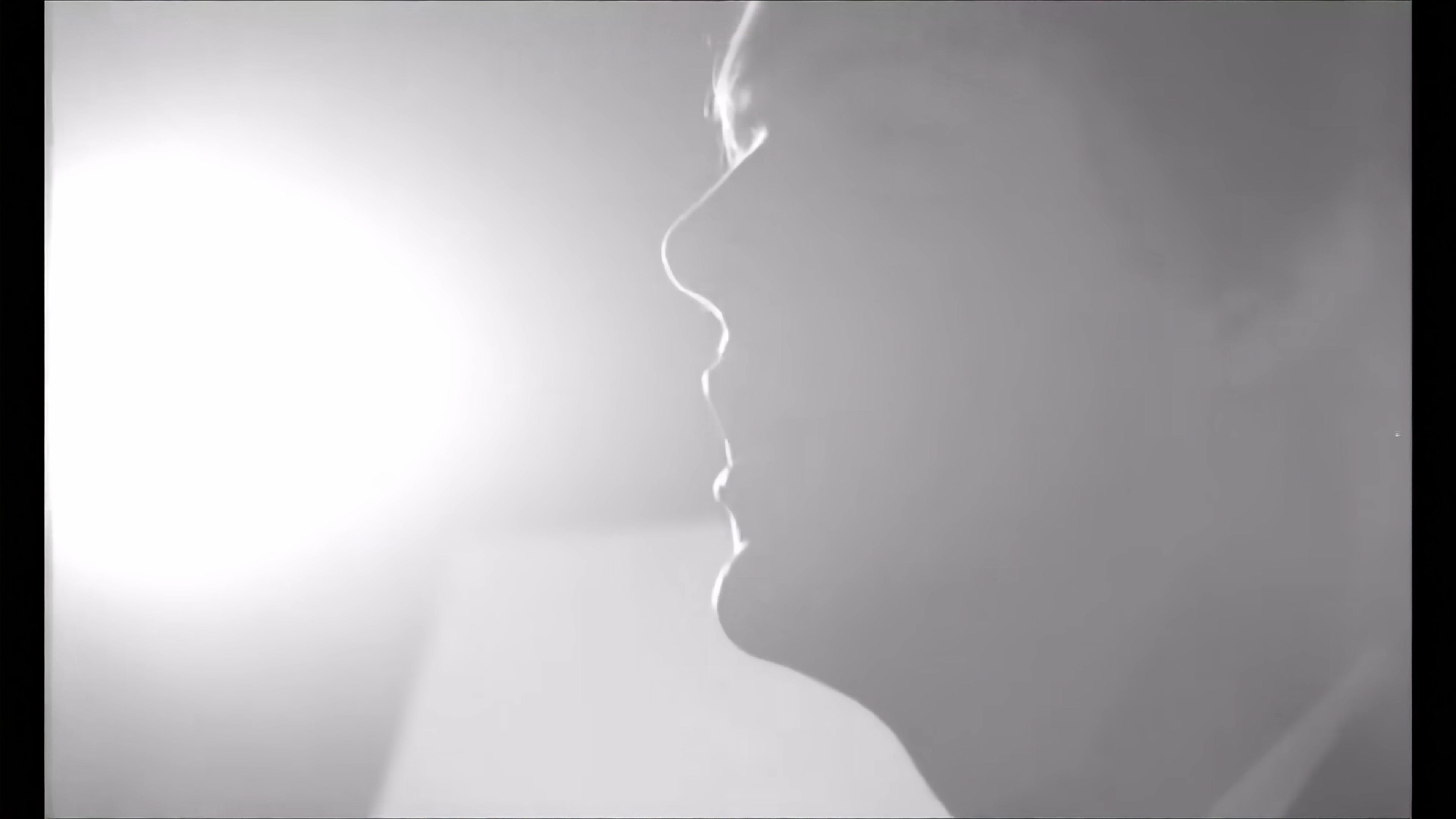
The film “A Hard Day’s Night” was slapped together quickly to capitalize on the Beatles’ fame. But its “And I Love Her” sequence received special attention. The performance shows Paul singing intimately to the camera while bathed in stark, dramatic lighting—a far cry from the film's usual kinetic energy 🎬 “Near the song’s end, a stage light flares directly into the camera lens, momentarily washing out McCartney’s face in a brilliant white haze. While it has the raw, spontaneous energy of a happy accident, the “bloom” was actually a piece of meticulous choreography by director Richard Lester. He devoted an entire afternoon to chasing that specific flare, running take after take until the light hit the glass at the perfect angle. The result is one of the film’s most enduring images—a moment where the cinematography seems to transcend the physical, as if the light itself was an emotional response to the music.
Paul’s Vocal Masterclass
McCartney’s vocal performance stands as one of his finest from the early period. He sings the verses with a controlled intimacy, never pushing, never straining. There’s a maturity in his delivery that belies his twenty-one years—he sounds like someone who’s actually experienced the devotion he’s describing rather than a kid play-acting at romance. The melody itself moves in elegant phrases, rising and falling with the natural cadence of speech. When Paul reaches “And I love her,” the title phrase, he delivers it with such simple conviction that it transcends cliché 💕
George’s Solo: The Song Within the Song
Then comes George Harrison’s guitar solo—six bars of perfection that demonstrate how much can be achieved with minimalism. Played on that same nylon-string classical guitar, the solo has a singing quality, each note carefully chosen and placed. As usual, Harrison doesn’t shred or show off; instead, he constructs a melodic statement that could stand alone as its own composition. The solo rises in gentle intervals, creating a sense of yearning and resolution that mirrors the song’s emotional arc. 🎸 George doesn’t just play over the chord progression—he responds to it, creating countermelodies that complement Paul’s vocal line. There’s a call-and-response quality, as if the guitar is providing the answers to questions the lyrics pose.
As McCartney has admitted many times over the years, it was George’s solo that made the song truly complete.
The song’s most daring move comes in its final moments: a key change from E major to F major. This wasn’t a typical pop key change, deployed to juice energy for a final chorus. Instead, it arrives after the song seems to have concluded, lifting everything into a new emotional register. The modulation feels less like manipulation and more like revelation—suddenly we’re hearing the same sentiments from a higher plane, as if love itself has transcended into something more permanent 🎹
Legacy and Influence
The band performed the song just once outside the recording studio, for a BBC radio show. Since then, it’s been covered by an eclectic group of artists, including Kurt Cobain, Santo & Johnny, and Esther Phillips.
“And I Love Her” proved enormously influential, demonstrating that rock bands could work in softer dynamics without sacrificing credibility. You can hear its DNA in countless subsequent ballads, from the Byrds’ folk-rock experiments to more contemporary acoustic-based pop. The song showed that sophistication wasn’t the enemy of authenticity, that you could aim for timelessness without sounding pretentious 🎼
As was customary, the songwriting was credited to “Lennon-McCartney,” with John contributing the lyrics for the middle eight section, but Lennon gave Paul all the credit, calling it his “first ‘Yesterday.’”
The Sound of Forever
In the end, “And I Love Her” achieves what Paul McCartney intended: it sounds like it’s always existed. The combination of acoustic instruments, elegant melody, mature vocal delivery, and sophisticated structure created something that transcends its 1964 origins. You could play it for someone with no knowledge of the Beatles or the sixties, and they might guess it was written last year—or fifty years ago. That’s the definition of a standard. 🎵 🌈
Visit my Beatles Store:


